An AI readiness assessment is a structured review of how prepared your organization is to use AI successfully. It evaluates five areas: strategy, data, technology, people and governance. At the end, you should receive a readiness scorecard, a prioritized list of AI opportunities, the gaps that would block them, and a practical action plan for the next 90 days.
Many organizations jump straight into AI tools or pilots. A readiness assessment answers a more important question first: where will AI create real value for us, and what do we need in place to get there?
Why readiness matters
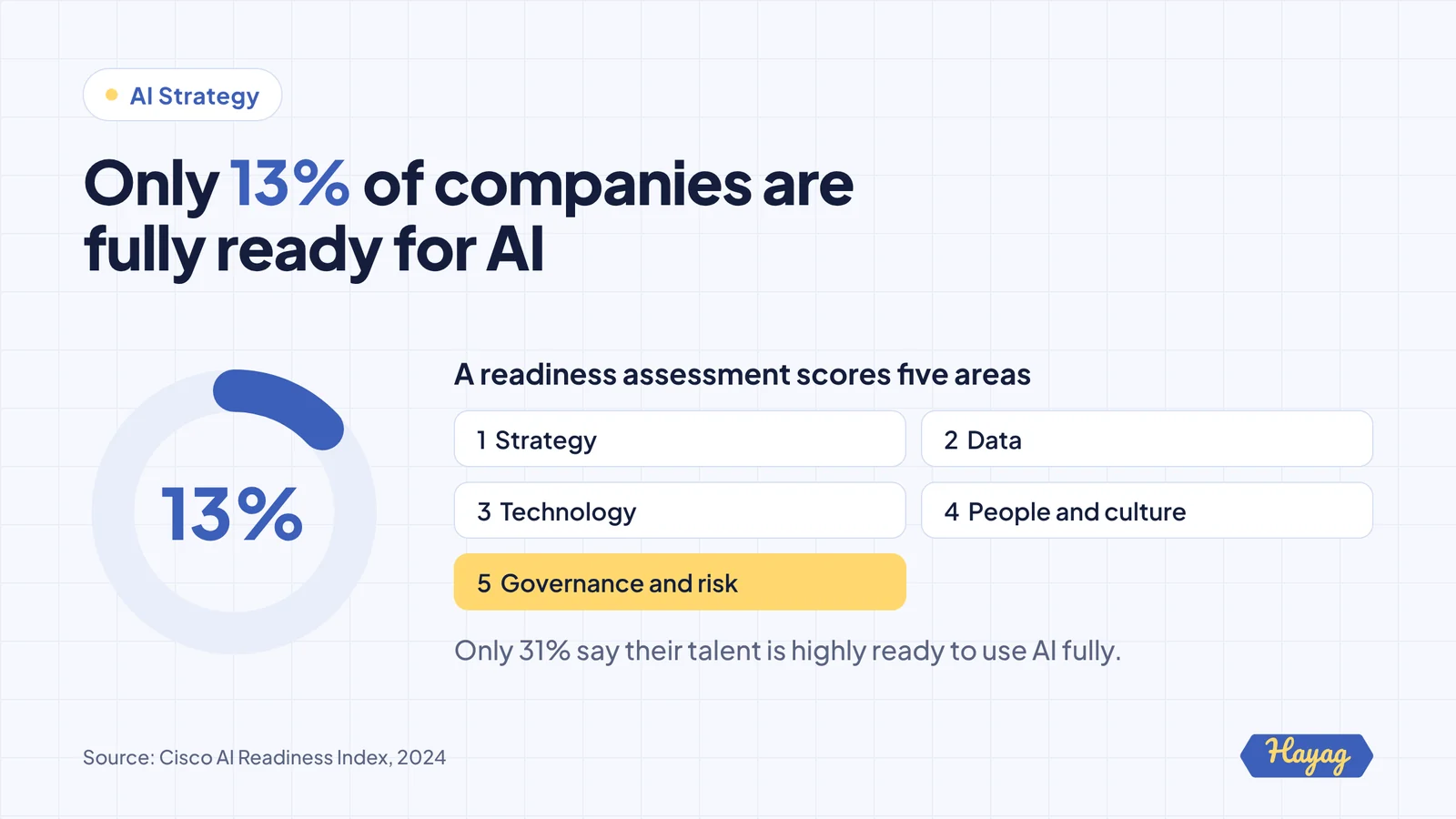
Interest in AI is high, but readiness is low. Cisco's 2024 AI Readiness Index, based on nearly 8,000 senior business leaders at organizations with 500 or more employees across 30 markets, found that only 13% of companies are fully prepared to capture AI's potential. That figure fell from 14% the year before, even as pressure to adopt AI increased.
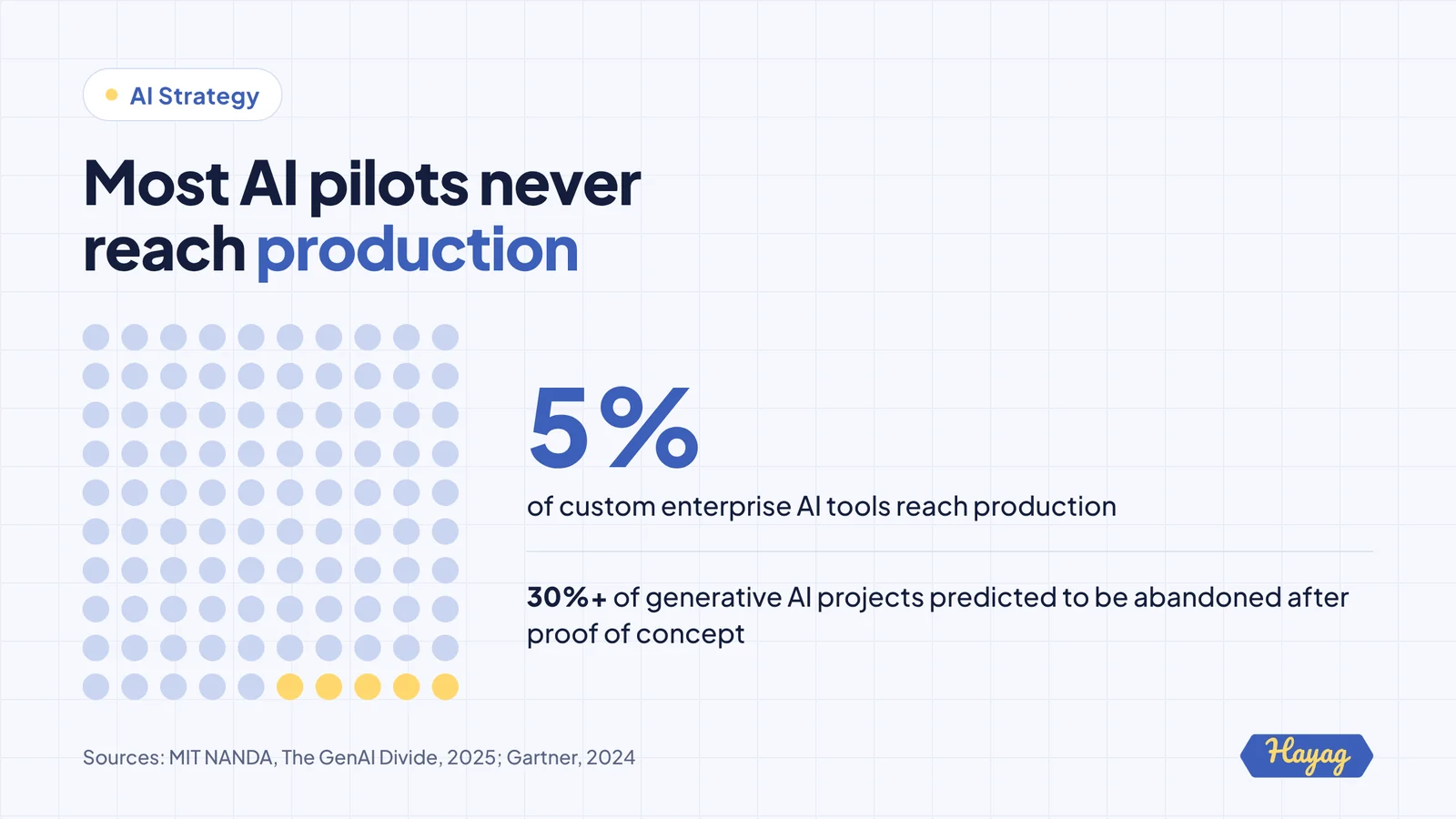
McKinsey's 2025 State of AI survey tells a similar story: 88% of organizations use AI, but nearly two-thirds are still experimenting or piloting. Without a clear view of readiness, organizations spend on pilots that never scale.
The five areas an AI readiness assessment should cover
1. Strategy
Does the organization have a clear view of why it wants to use AI and what success looks like?
- Are AI goals linked to business priorities?
- Is there a senior sponsor with authority and budget?
- Are potential use cases identified and prioritized?
2. Data
AI is only as good as the data behind it.
- Is important data accessible, accurate and well organized?
- Are there clear owners for key data sets?
- Can data be used safely, with the right permissions and privacy controls?
3. Technology
- Can current systems connect to AI tools securely?
- Is there a sensible approach to choosing vendors and models?
- Are cloud, security and integration capabilities in place?
4. People and culture
This is often the most overlooked area. Cisco's index found that only 31% of organizations say their talent is highly ready to make full use of AI.
- Do employees understand what AI can and cannot do?
- Are leaders confident making AI decisions?
- Is there a culture of experimentation, or fear of change?
- Is training available, and is it role-specific?
5. Governance and risk
- Is there an AI acceptable use policy?
- Who reviews and approves new AI use cases?
- How are accuracy, privacy, security and bias risks managed?
- Are regulatory requirements in your markets understood?
How an AI readiness assessment works
A typical assessment takes two to six weeks, depending on organization size and scope.
| Stage | What happens |
|---|---|
| Discovery | Leadership interviews, goals and constraints agreed |
| Data gathering | Surveys, team interviews, systems and data review |
| Scoring | Each area rated against a maturity scale |
| Opportunity mapping | Use cases ranked by value, feasibility and risk |
| Recommendations | Gaps, priorities and a phased action plan |
| Readout | Findings presented to leadership |
The best assessments involve people across the organization, not just IT. Frontline teams often know exactly where AI would help most.
What you should receive at the end
A good assessment produces practical outputs your leadership can act on:
- Readiness scorecard rating each of the five areas, with clear evidence
- Opportunity map showing the highest-value use cases, ranked by impact and feasibility
- Gap analysis explaining what would block each priority use case
- Quick wins that can deliver value within weeks
- 90-day action plan with owners, steps and success measures
- Executive summary suitable for a board or leadership meeting
If an assessment ends with a long report and no clear next step, it has not done its job.
A quick self-check: are you ready for an assessment?
Answer yes or no to each question:
- We have more AI ideas than we can realistically pursue.
- Teams are using AI tools without clear guidance.
- We have run pilots that did not scale.
- Leaders disagree on where AI should be used first.
- We are unsure whether our data is ready for AI.
- We do not have an AI policy, or it is not widely understood.
If you answered yes to two or more, an assessment will likely save you time and money.
How to choose an assessment partner
- Look beyond technology. People, process and governance matter as much as tools.
- Ask for sample deliverables. You should see the format of the scorecard and action plan before you start.
- Check for vendor neutrality. An assessment should not be a sales process for a specific product.
- Agree a fixed scope and fee. A clear scope keeps the assessment focused and predictable.
Key takeaways
- An AI readiness assessment reviews strategy, data, technology, people and governance.
- Only a small share of organizations are fully ready for AI, so most benefit from one.
- It typically takes two to six weeks and involves people across the organization.
- The outputs should include a scorecard, an opportunity map and a 90-day action plan.