The UAE introduced artificial intelligence as a formal subject in government schools from kindergarten to Grade 12, starting in the 2025-26 academic year. Private and international schools are under growing pressure to match it. To prepare, schools should assess their readiness, map AI learning outcomes across grade levels, train teachers before launch, set a clear responsible AI policy, and build AI into existing subjects as well as standalone lessons.
The UAE is among the first countries to make AI education a structured part of schooling from the earliest years. For private schools, the question is no longer whether to teach AI, but how to do it well.
What the UAE has introduced
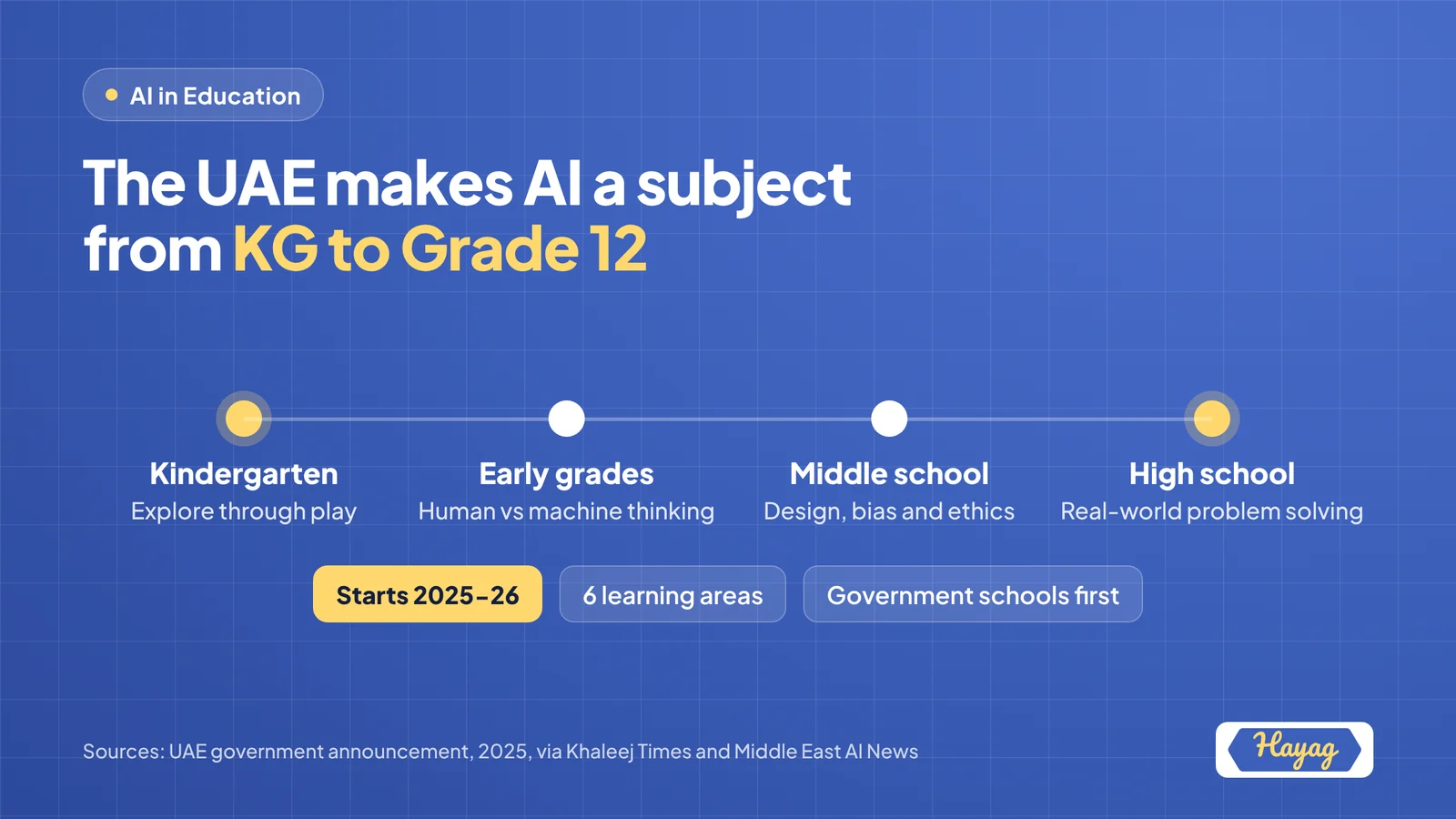
In May 2025, the UAE Cabinet approved AI as a standalone subject for all government schools. Classes began at the start of the 2025-26 academic year, with more than 1,000 teachers trained to deliver them.
The curriculum is organized around six areas:
- Fundamental AI concepts
- Software applications
- Ethical awareness
- Real-world applications
- Innovation and project design
- AI policies and community engagement
Learning is designed to match each stage of development:
| Stage | Focus |
|---|---|
| Kindergarten | Exploring digital ideas through stories, visuals and play |
| Early grades | Comparing human and machine abilities, building digital thinking |
| Middle school | AI design, algorithmic bias and ethics |
| High school | Real-world problem solving and advanced concepts |
Younger students have classes every two weeks, while older students have weekly sessions.
Why private schools should act now
Although the mandate applies to government schools, it sets a clear expectation across the country. Parents now compare schools on how well they prepare students for an AI-shaped future. Inspection frameworks and accreditation bodies are paying closer attention to digital skills. And international curricula are moving in the same direction.
Schools that wait risk falling behind both public schools and competitors in a crowded private education market.
The biggest challenge: teacher readiness
When the curriculum was announced, UAE educators were clear that teacher training was the most important area needing attention. Teachers need to understand AI well enough to teach it, use it confidently in their own work, and guide students on responsible use.
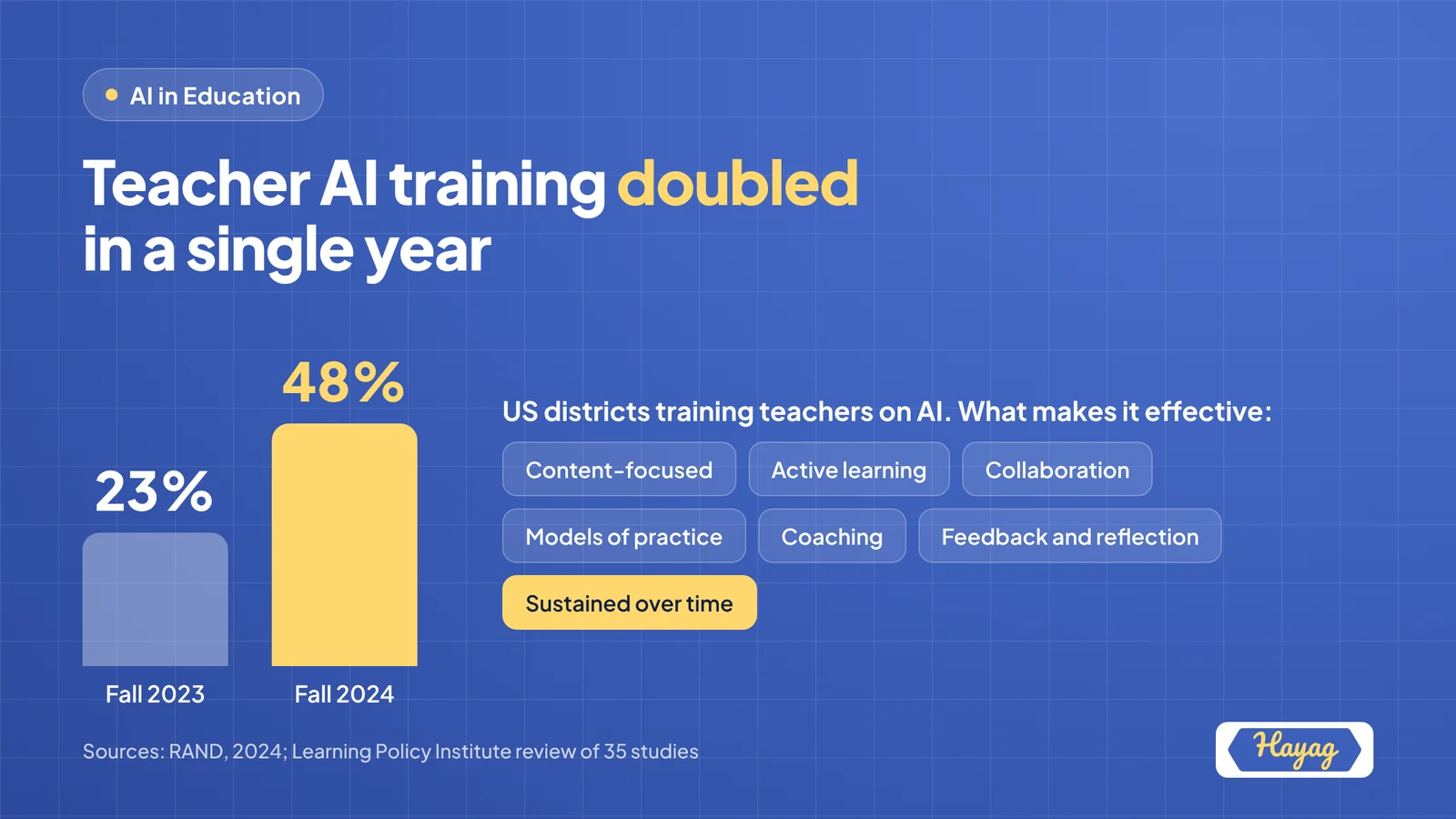
This is not unique to the UAE. In the United States, RAND research found the share of school districts training teachers on AI rose from 23% to 48% in a single year, but almost all of that training was optional. Schools that build structured, ongoing teacher development will move faster and more consistently.
A six-step plan to prepare your school
Step 1: Assess your readiness
Review where your school stands today:
- How confident are teachers with AI tools and concepts?
- What devices, software and connectivity are available?
- Do you have a policy on student and staff AI use?
- Where does AI already appear in your curriculum, if anywhere?
Step 2: Choose your delivery model
Schools generally combine two approaches:
- Standalone AI lessons that teach concepts, ethics and design in a dedicated slot
- Integrated AI learning within existing subjects, such as data analysis in mathematics, bias in social studies or AI-assisted writing in languages
A blended model lets you meet expectations without overloading the timetable.
Step 3: Map learning outcomes by grade
Build a scope and sequence that shows what students should know and be able to do at each stage. Align it with the six UAE curriculum areas and with recognized guidance such as the UNESCO AI Competency Framework for Students. This creates a coherent progression rather than isolated activities.
Step 4: Train teachers before launch
Effective teacher development is practical and ongoing. Research from the Learning Policy Institute, based on a review of 35 studies, found that professional development works best when it is content-focused, involves active learning and collaboration, includes coaching and feedback, and is sustained over time.
For AI, that means:
- Hands-on sessions where teachers use AI for planning, differentiation and feedback
- Lesson-ready activities they can use immediately
- Follow-up coaching during the first term
- A space to share what works across departments
Step 5: Set a responsible AI policy
Before students use AI widely, agree clear rules on:
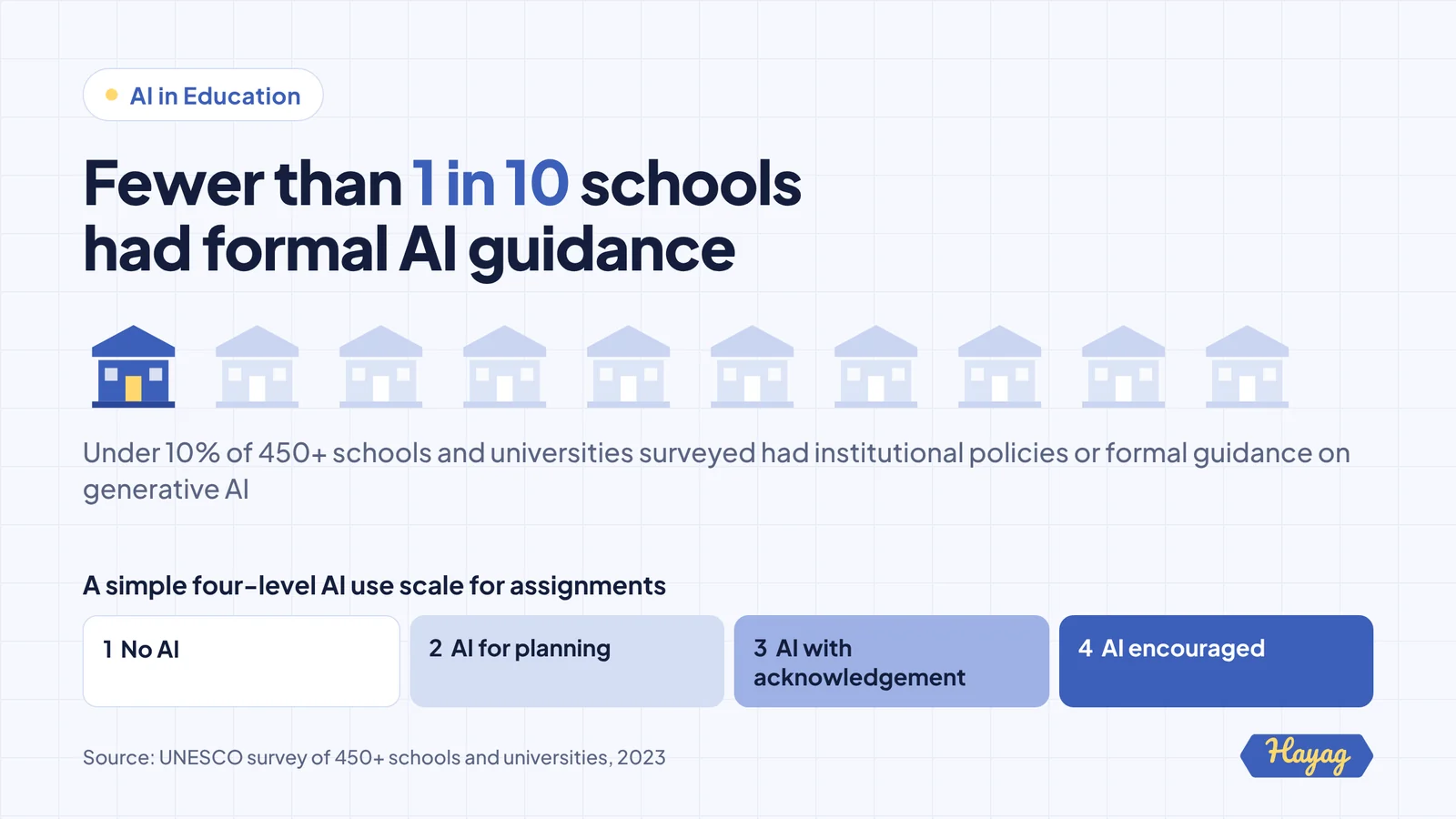
- When students may and may not use AI in assignments and assessments
- How AI use should be acknowledged
- What student data may be used in AI tools
- How teachers will design assessments that still measure real learning
Share the policy with parents as well as staff and students.
Step 6: Review and improve each term
Collect feedback from teachers and students, review samples of student work, and refine lessons and training. AI tools change quickly, so plan for regular updates.
A sample first-year timeline
| Term | Focus |
|---|---|
| Before the year starts | Readiness review, policy, curriculum map, initial teacher training |
| Term 1 | Launch AI lessons in selected grades, weekly teacher support |
| Term 2 | Expand to more grades, introduce integrated subject activities |
| Term 3 | Student projects, review outcomes, plan year two |
Key takeaways
- The UAE made AI a formal K-12 subject in government schools from 2025-26.
- The curriculum covers concepts, applications, ethics, real-world use, design and policy.
- Teacher readiness is the biggest challenge, and training should be practical and ongoing.
- Private schools should combine standalone and integrated lessons, mapped by grade.
- A clear responsible AI policy should be in place before wider student use.